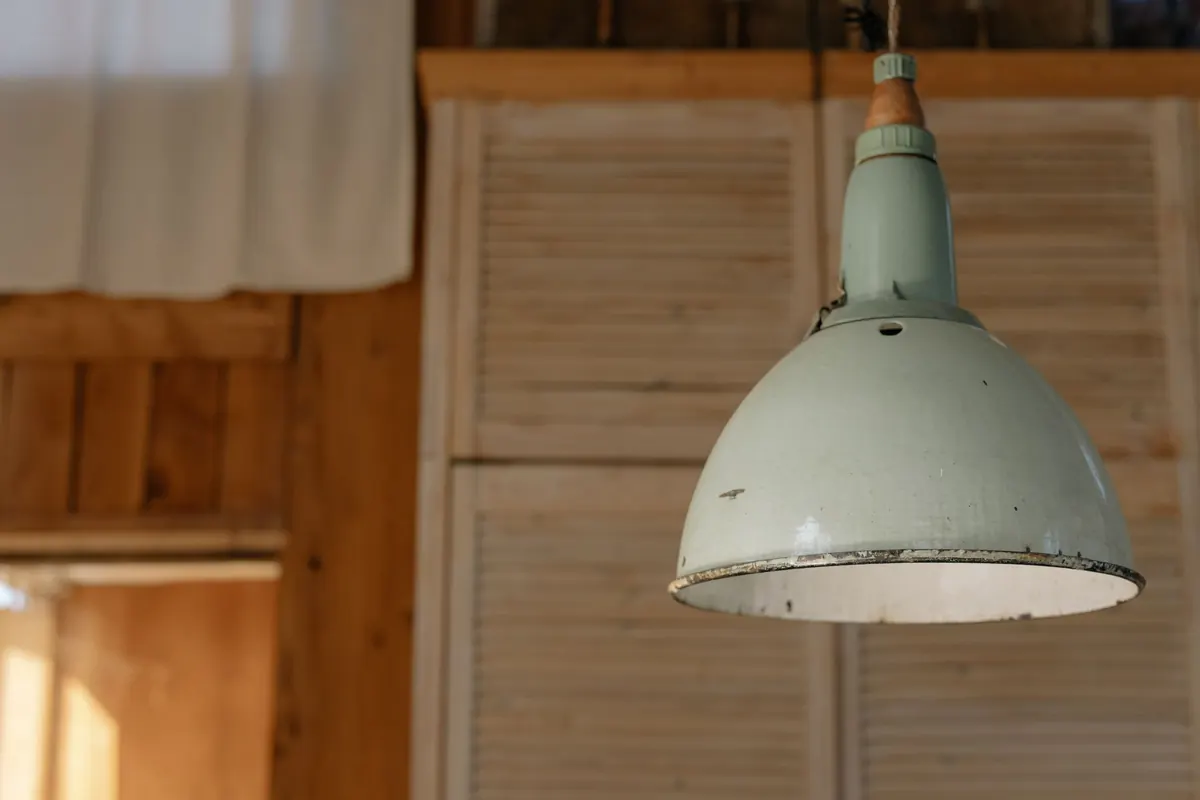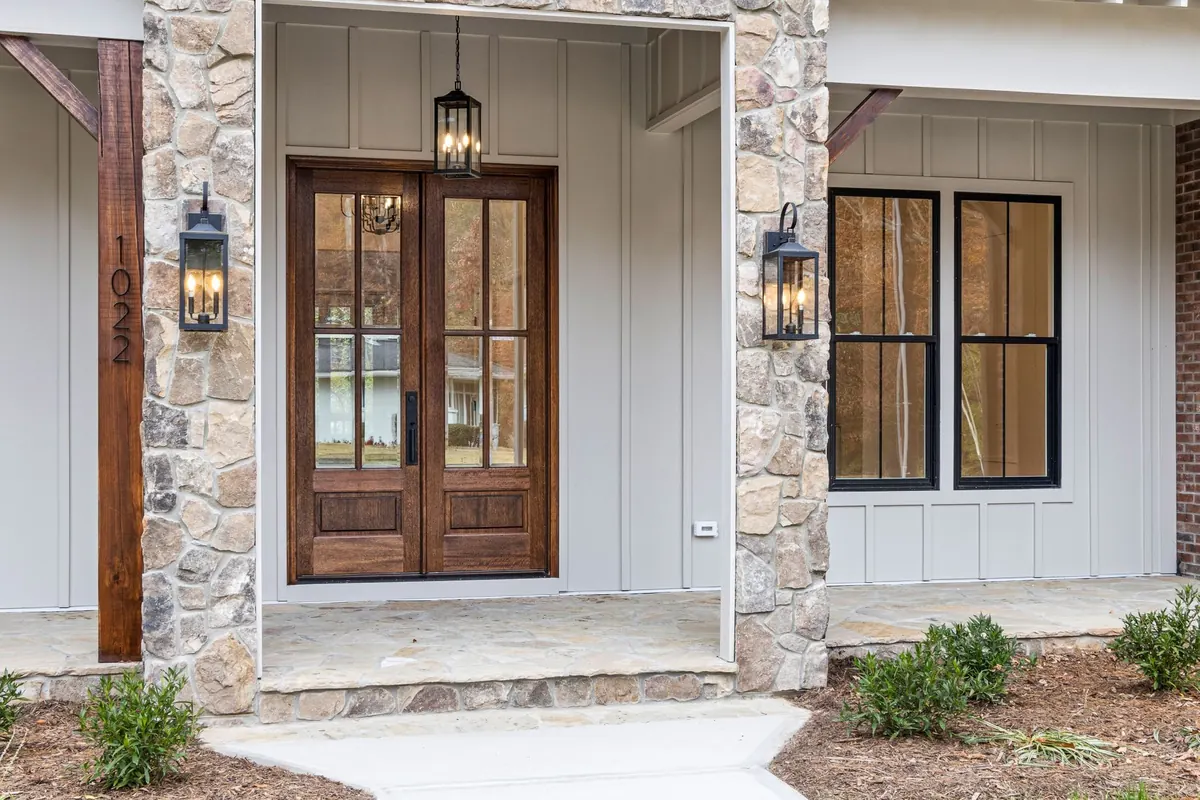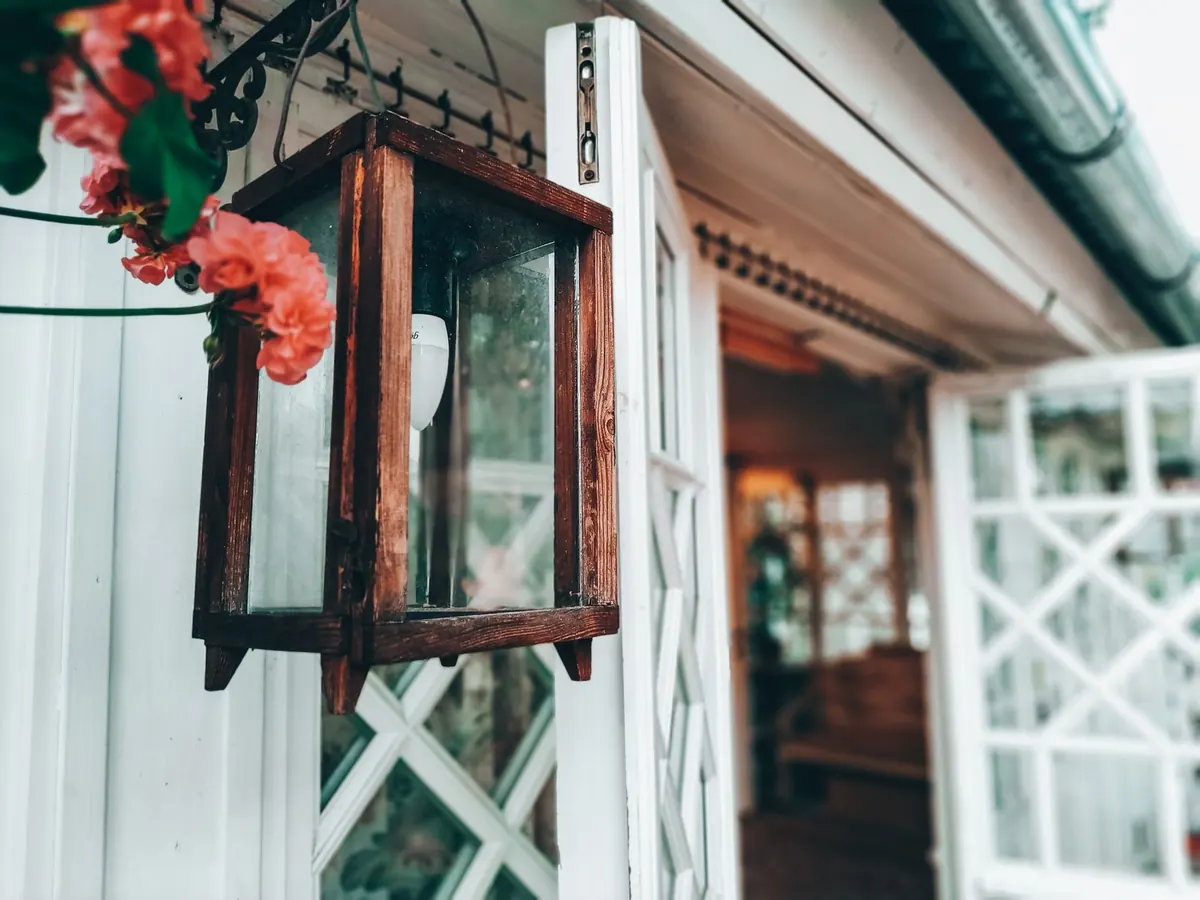
A porch lantern does two jobs at once. It lights the way to your door, and it tells anyone walking past that the entry was finished on purpose. Most people get the first part right without much thought. The second part is where a lantern ends up looking like a dollhouse accessory bolted to the brick, or so large it swallows the door it was meant to frame. Size isn't about the lantern by itself. It's about the relationship between the lantern, the door, and the porch around them.
Start With the Door, Not the Fixture
Before you browse anything, measure four things and write them down. Your door is the fixed reference point; every other decision scales from it.
- The height and width of the door, measured to the outside of the trim.
- The ceiling height of the porch, if there is one.
- The clear wall space on each side of the door, including any shutters, columns, or sidelights.
- The distance from the porch floor to the top of the door opening.
Those four numbers will eliminate half the catalog immediately. A lantern that needs twelve inches of wall beside the door simply won't work on a stoop with eight.
Scale Rules You Can Start With
Designers lean on a few proportions because they hold up across a wide range of houses. Treat them as starting points, then trust your eye.
- Height: a wall lantern usually reads best at roughly one-quarter to one-third the height of the door. On a standard eight-foot door, that's somewhere between twenty and twenty-seven inches.
- Width: a single lantern beside a standard three-foot door tends to land between nine and twelve inches wide. Paired lanterns look better slightly narrower each, closer to eight or ten inches, so together they don't outweigh the door.
- Depth: a lantern that projects too far crowds the walkway; one that sits flush against the siding disappears. Aim for a projection that leaves a few inches of breathing room between the glass and the wall.
When the porch is large
A wide façade with columns and a deep setback needs more lantern than a modest stoop. Go up a size, and favor vertical lanterns over squat ones. Height carries across distance; width just makes a fixture look heavy.
When the porch is small
Narrow stoops and tight entries do better with restraint. Keep the width modest, stay near the smaller end of the height range, and consider a semi-flush or flush-mount fixture where a hanging lantern would hang in someone's face.
Hanging Height Over the Steps
If you're hanging a lantern from the porch ceiling, the bottom of the fixture should sit about six and a half to seven feet above the porch floor. That's high enough for tall guests and deliveries, low enough that the light still reaches the door. A useful alignment: set the bottom of the lantern roughly level with the top of the door, or a touch above it.
Watch the door swing as well. A chain-hung lantern placed directly in front of an outward-swinging door will be a problem on a windy day. Shift it off-center or clear of the arc entirely. On a low porch ceiling, you may only have a foot or two of chain to work with, which is your cue to choose a shorter lantern rather than a longer chain.
Wall Lantern Mounting Height
For a lantern mounted on the wall beside the door, the center of the fixture usually lands between sixty-six and seventy-two inches above the porch floor. Another way to check it: the top of the lantern should finish near the top of the door, or just below the trim line. On two-story entries and porches with high ceilings, both the center line and the lantern size often need to move up, or the fixture will look like it's sinking.
Side to side, leave a few inches of wall between the door trim and the edge of the lantern. Pressed tight against the trim, even a well-sized lantern looks like an afterthought.
One Lantern or Two?
A single lantern works on narrower entries, especially when placed on the hinge side of the door, which is the side guests naturally approach. Pairs suit wider façades and doors with sidelights, where the symmetry is already established. On a long porch with several bays, three fixtures spaced evenly can look intentional in a way that two never quite manage.
Whatever the count, keep the spacing consistent between fixtures, and keep the lantern style identical. Mixing sizes on the same wall is one of the few choices that rarely reads as deliberate.
The View From the Street
Stand at the curb, or at least twenty feet back, and look at the entry. This is the test that catches most sizing mistakes. A lantern that looks generous at arm's length can look like a postage stamp from the sidewalk, because distance shrinks small details fastest. If your porch sits far back from the road, or the house has a broad front, err on the larger side.
A phone photo helps here. Take one from the curb, then look at it on a small screen. If the lantern is hard to pick out, it's undersized.
Practical Details That Affect Size
Two lanterns with identical dimensions can look very different once installed. Clear glass and visible bulbs read lighter and slightly smaller than seeded or opaque glass in a heavy frame. A lantern with a wide backplate looks more substantial than its measurements suggest. Warm light, around 2700K, flatters brick and wood in a way that stark white light does not, and a fixture rated for wet locations will hold up far better on an exposed porch than a damp-rated one.
Before ordering, confirm the backplate will cover the existing junction box and that the wall can carry the fixture's weight. If new wiring is needed, have the lantern on hand so your electrician can mount it to the correct height rather than guessing. Electrical work on a new circuit is best left to a licensed electrician.
A Five-Minute Check Before You Buy
Cut a piece of cardboard to the lantern's height and width, tape it to the wall where the fixture will go, and step back to the curb. Check that the top edge sits near the door head and that the bottom edge clears comfortable head height if you're hanging it. Then check the width against the door: if the cardboard looks timid, size up; if it crowds the trim, size down. For a pair, order one first, hold it in place, and only then commit to the second. It's a small extra step that saves a return, a patch job, and a hole in the wall you'd rather not explain.
Photo: Sun452 / Pexels